Are you a keen cook who likes a kitchen that is organised, clean and safe? Then you have more to do with Lean than you might think. 5S, a method from the Japanese car industry for putting workplaces in order, works just as well at home as in a factory. And anyone who has looked around a restaurant kitchen knows that good cooks have applied it for years.
What is 5S?
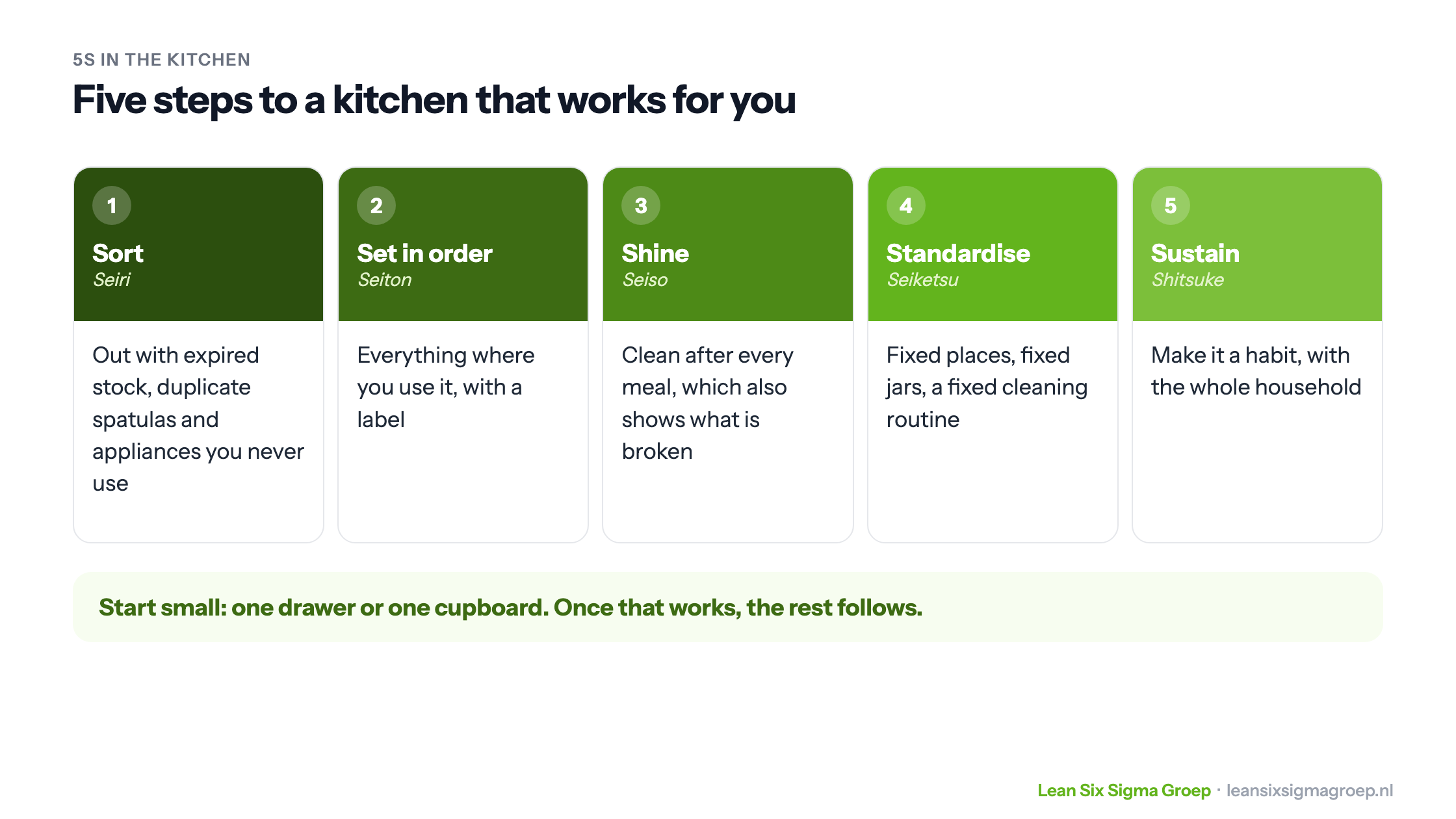
5S consists of five steps, which in Japanese all begin with an S: Sort (seiri), Set in order (seiton), Shine (seiso), Standardise (seiketsu) and Sustain (shitsuke). The aim is a workplace where you never need to search, where you see what is missing, and which stays tidy by itself. The image at the top of this article shows what each step means in the kitchen.
1. Sort
Remove everything you don’t need: expired ingredients, the third whisk, the bread maker that has sat in the cupboard for years. In doubt? Put it in a box in the shed for a month. If you haven’t missed it in that month, it can go. What remains fits better and is quicker to find.
2. Set in order
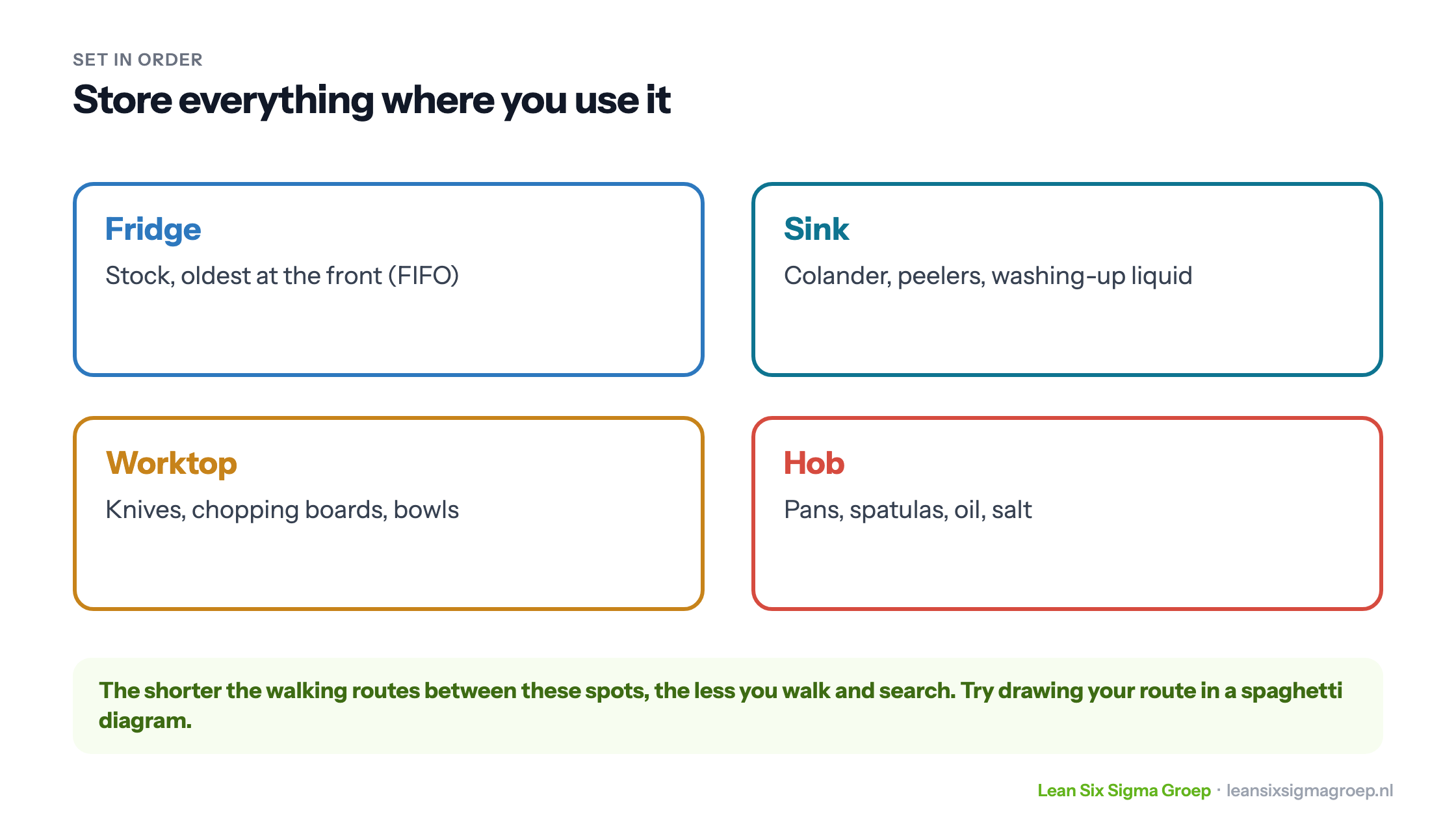
Give everything that remains a fixed place, as close as possible to where you use it. Pans and spatulas by the hob, knives and chopping boards by the worktop, the colander by the sink. What you use every day goes at the front and within reach; what you use once a year can go at the back. Label storage jars, so others can see what is in them too. In the fridge, put the oldest at the front: first in, first out.
This is one of the tools you learn to apply in the Green Belt training.
3. Shine
Clean the kitchen after every meal, and plan a thorough clean now and then. In 5S, cleaning is also checking: whoever cleans spots the dripping tap, the nearly empty bottle of oil or the blunt knife. A clean kitchen is also safer, with less chance of spoilage and contamination.
4. Standardise
The kitchen is tidy and clean. How do you keep it that way? With fixed agreements: fixed places, fixed jars, a fixed cleaning routine, and for example a shopping list that always hangs in the same place. A fixed recipe for your weekly menu or a fixed order when cooking is standardisation too: you have to think less, and less goes wrong.
5. Sustain
This is the hardest step. Anyone can tidy up once, but how do you keep it up? Make it a habit, with the whole household. Explain why things have a fixed place, to the children too, and check together now and then whether the agreements still work. A standard nobody follows is no standard.
More Lean in the kitchen
- Mise en place. Cooks prepare everything before they start: vegetables chopped, herbs weighed, pans on the heat. Then the cooking runs without interruption. In Lean that is called flow.
- Colour codes. In professional kitchens chopping boards have a colour per type of product, such as red for raw meat and green for vegetables. That prevents bacteria passing from one to the other. It is a form of poka-yoke: making a mistake impossible.
- Short walking routes. How much do you walk back and forth while cooking? Draw it in a spaghetti diagram. Chances are that moving a few things will save you a lot of steps.
Want to try 5S yourself? Use the 5S checklist for your own kitchen or workplace.