
When do you use portfolio management?
Picture an organisation running several projects and improvement initiatives at the same time. The board has ambitious targets and different teams are working on innovations, but there’s a problem: not everything can happen at once. Which initiatives deliver the most value? Where should people, resources and budgets go?
Portfolio management helps you make strategic choices and get the most out of your resources. It’s especially valuable in the following situations:
- Several projects are running that call for prioritisation.
- The organisation wants to translate its strategy effectively into concrete operational and tactical goals.
- There’s a need for clear decision-making on where budget, staff and time are invested.
- Agility and continuous improvement are essential for success.
- Stakeholders want a transparent overview of current and future initiatives.
By applying structured portfolio management, an organisation can respond to change faster and achieve its goals more efficiently.
What is portfolio management?
Portfolio management is the process by which an organisation manages strategic initiatives, projects and improvements and aligns them with its business strategy. The aim is to use the available resources effectively and make sure every initiative genuinely contributes to the organisation’s long-term objectives.
With portfolio management set up properly, an organisation can strike the balance between innovation, continuity and operational efficiency. It helps maximise the value of projects while keeping risks to a minimum.
But how does portfolio management relate to the Lean Agile Model?
The role of portfolio management within the Lean Agile Model
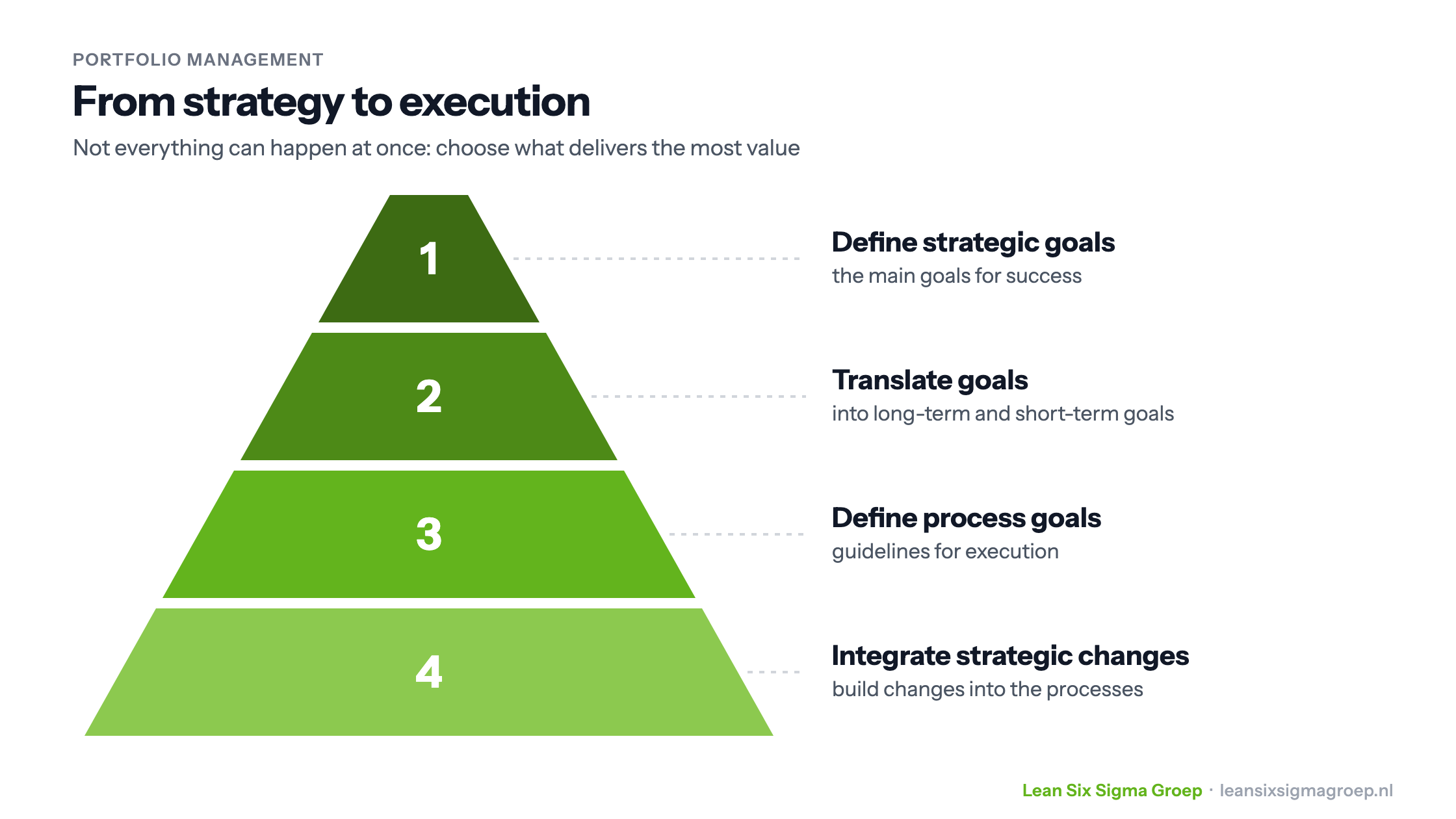
Within the Lean Agile Model, portfolio management acts as a compass that translates strategic goals into concrete initiatives. This means organisations decide not only what they want to achieve, but also how they’ll do it and when the right initiatives get started.
Within this model, portfolio management focuses on:
- Translating strategic goals into long-term and short-term goals.
- Defining process goals to steer execution.
- Setting improvement goals to safeguard continuous development.
When a strategic change is needed, it isn’t imposed top-down but built into the existing improvement process and day-to-day operations. That stops employees from being swamped with change initiatives that lack a clear direction.
Portfolio management gives you a framework in which the right choices get made: not everything can happen at once, and not every idea is feasible straight away. That’s why a structured approach helps you deploy people, resources and budgets effectively.
This is one of the tools you learn to apply in the Green Belt training.
What does a portfolio manager do?
The portfolio manager is the linchpin of decision-making around projects and improvement initiatives. They make sure that every current and planned activity contributes to the organisation’s strategic goals. Key tasks of a portfolio manager include:
- Setting priorities and keeping initiatives in balance.
- Allocating resources and budgets to deliver the highest value.
- Monitoring progress and adjusting course where needed.
- Aligning with stakeholders and strategic management.
- Continuous evaluation to keep the portfolio flexible and future-proof.
Portfolio management: from simple to complex
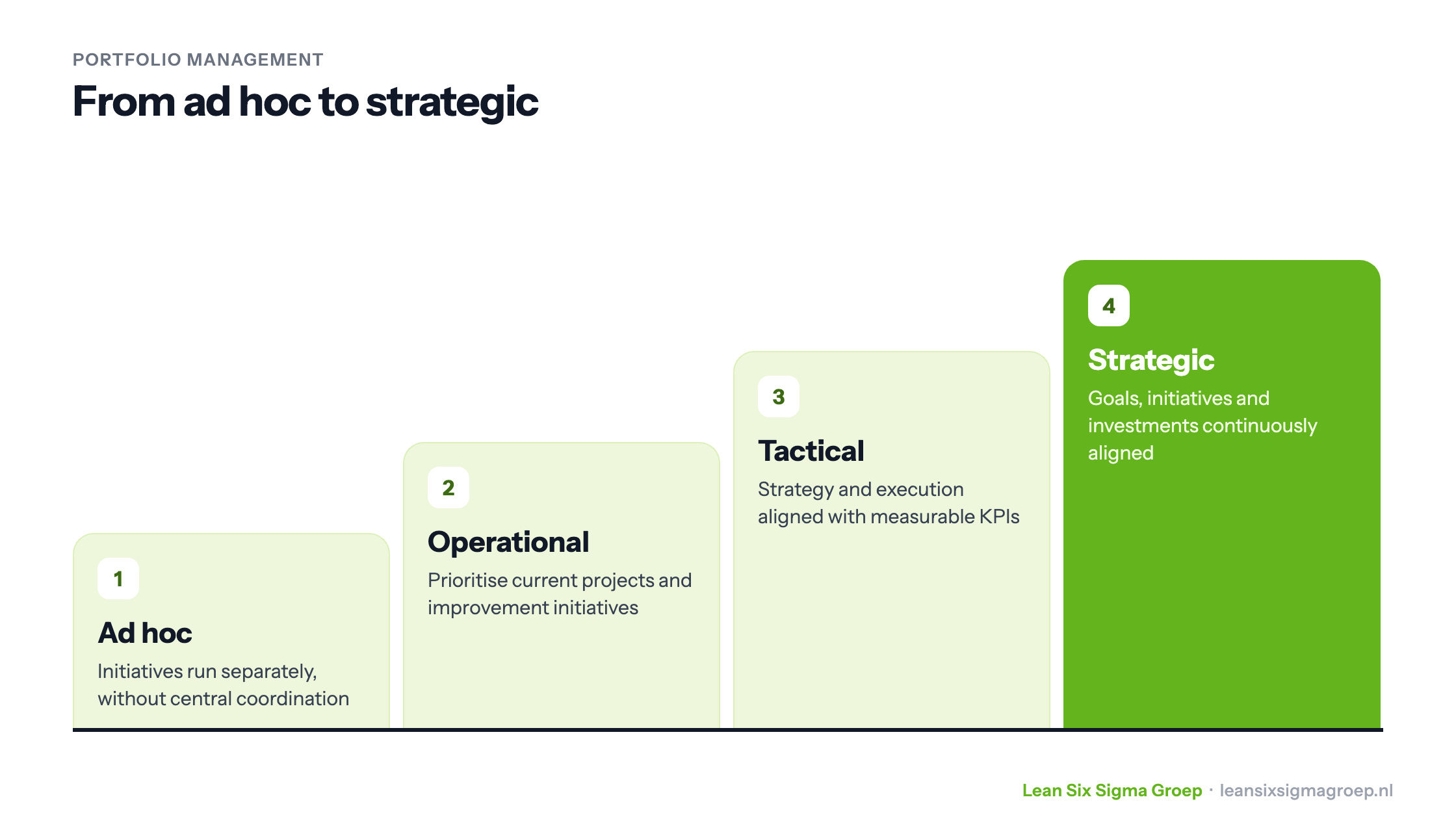
Not every organisation takes the same approach. Depending on the size and complexity of the organisation, portfolio management can range from ad hoc management to a deeply integrated strategic process.
- Ad hoc portfolio management: initiatives are managed separately, without central coordination.
- Operational portfolio management: the focus is on prioritising current projects and improvement initiatives.
- Tactical portfolio management: strategy and execution are aligned using measurable KPIs.
- Strategic portfolio management: goals, initiatives and investments are continuously aligned across the organisation.
From the perspective of the Lean Agile Model and its ‘Set the direction’ approach, the emphasis is on a strategic focus that cascades down to the tactical and operational levels. One of the most effective ways to organise this is through Obeya.
Obeya: the visual bridge between strategy and execution
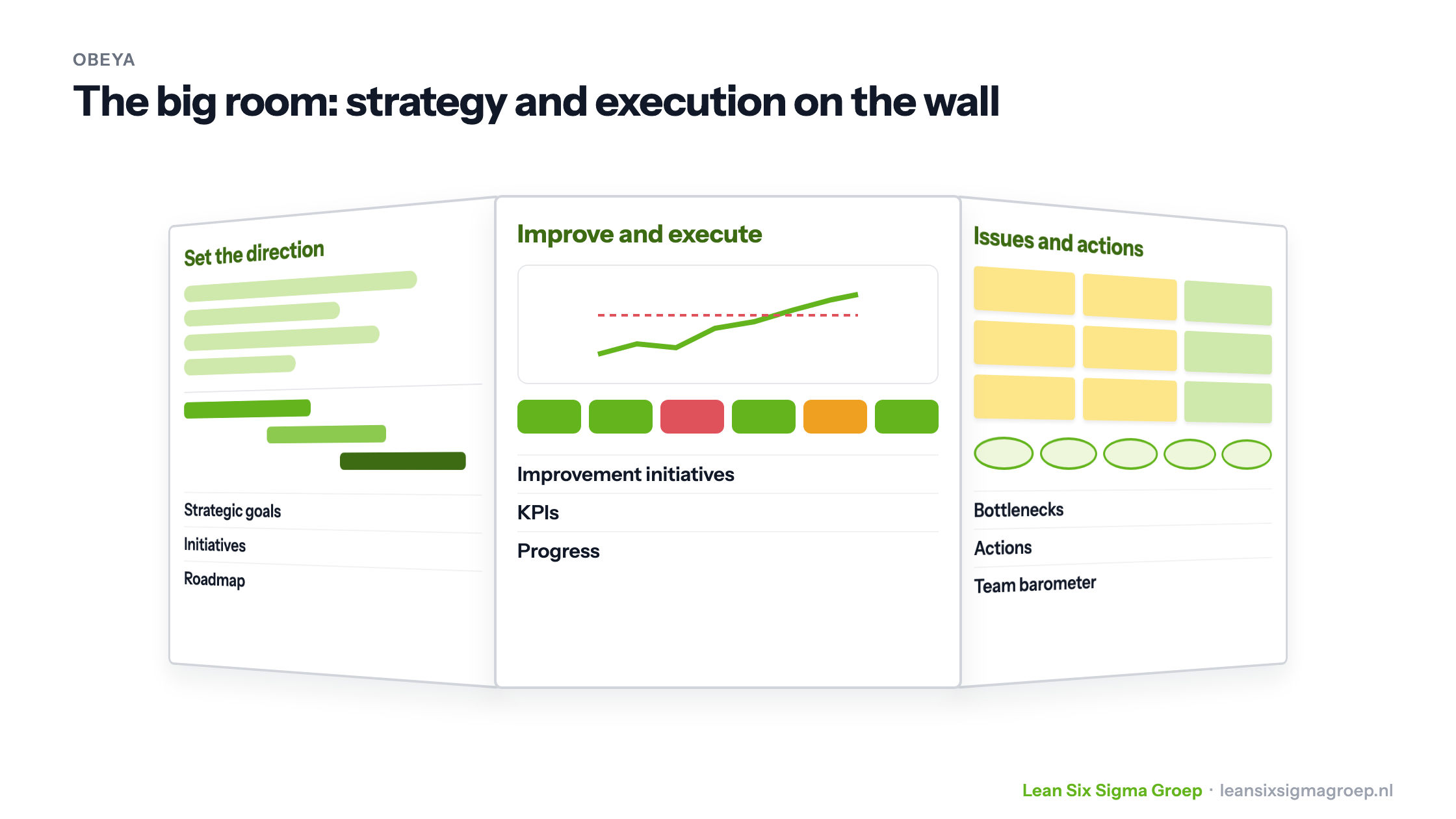
In Lean organisations, Obeya is often used as a powerful tool to connect strategic goals with daily operations. The Japanese word Obeya literally means “big room” and refers to a visual management technique in which teams and leaders come together to make decisions.
In the context of portfolio management, Obeya gives a clear overview of:
- Strategic goals and initiatives
- Project progress and bottlenecks
- Resources and priorities
- Data-driven decision-making through KPIs
Regular meetings in the Obeya create a fast feedback loop that lets managers and teams keep adjusting and optimising.
How do you set up portfolio management?
A successful portfolio management process goes through the following steps:
- Define strategic objectives and translate them into measurable portfolio goals.
- Map the current portfolio, including current and planned initiatives.
- Set priorities based on value creation, risks and strategic fit.
- Organise governance by establishing clear roles and decision-making processes.
- Implement Lean Agile methods to safeguard flexibility and continuous improvement.
- Monitor and adjust based on progress and changing circumstances.
Conclusion
By combining the Lean Agile Model with portfolio management, organisations can make strategic plans workable. That means companies respond to change faster, use resources more effectively and foster a culture of continuous improvement.
By applying methods such as Obeya and Hoshin Kanri, strategic alignment stops being an abstract concept and becomes a workable, everyday reality. Want to make strategy truly workable? It starts with the right choices and a well-thought-out approach.
Want to find out more about how portfolio management and the Lean Agile Model can help your organisation? Get in touch for a no-obligation conversation!