Publicatie
Swimlane diagram
Visualise process steps with swimlane diagrams for clarity and efficiency.
 André HoogstadBlack Belt Consultant
Published 3 min read
What is a swimlane?
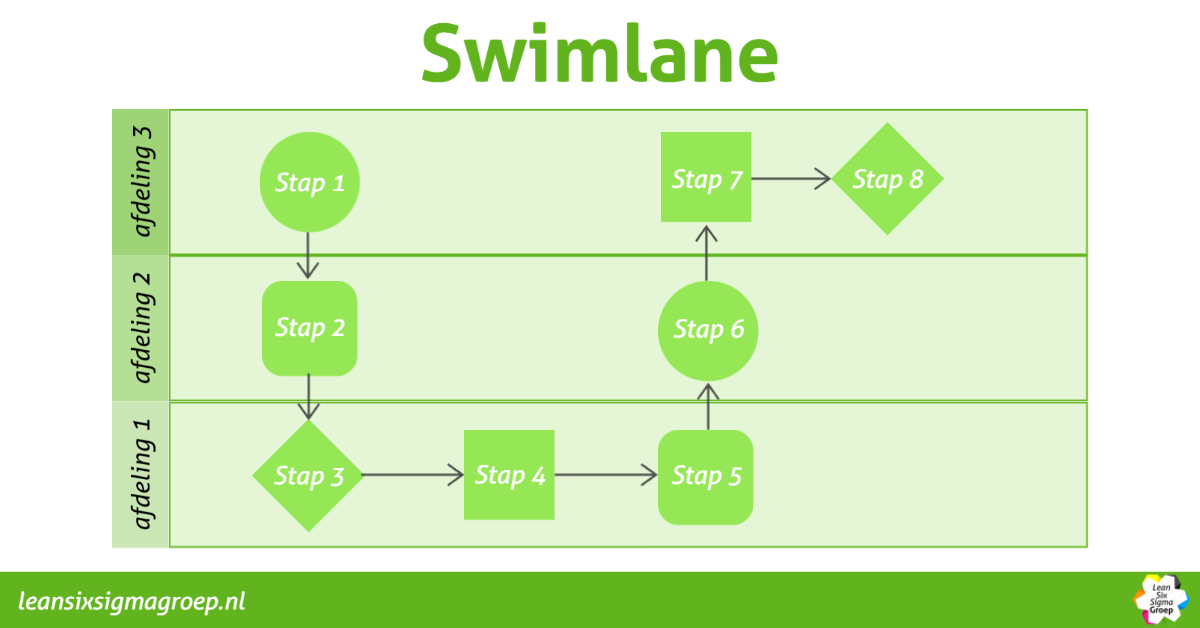
Swimlane diagrams are a visual way to map, analyse and improve processes and tasks. The diagram is also known as a cross-functional flowchart, because it brings in the different departments or functional areas within an organisation. It shows how those departments work together, right up to the point where the process is complete. It helps you spot potential problems in the process and gives insight into the tasks, responsibilities and roles of everyone involved.
What does a swimlane diagram consist of?
A swimlane diagram consists of horizontal rows, each shown as a separate “lane”. Every lane represents a specific department, team, individual or role. The steps or actions in the process are placed along the vertical axis. That way each lane makes clear which step sits in which department, so it becomes obvious which department is responsible for which tasks and which steps in the process.
What is it used for?
Swimlane diagrams are often used for the following:
- Process analysis: the diagram is used to analyse the process and its individual steps and to identify potential problems or waste.
- Process improvement: the diagram is used to identify inefficiencies and improve the process, for example by simplifying tasks or redistributing responsibilities.
- Communication: the diagram is used to make the process and the roles of each department or person visible. That makes it easier to start the conversation between departments, so everyone understands how the different departments or roles work together.
Advantages and disadvantages of a swimlane
Using a swimlane diagram has several advantages and disadvantages.
Advantages:
- Better process visualisation: a swimlane diagram gives a clear picture of the different steps in a process and which departments or roles are responsible for which tasks. That helps to identify waste or obstacles, and opportunities to improve the process.
- Better collaboration: the swimlane clearly maps which departments or roles are involved in which steps of the process. That makes it easier to reach agreements, which can contribute to better collaboration between the different departments or roles.
- Identifying problems: a swimlane diagram can help to identify problems or bottlenecks in the process. Once those problems have been found, organisations can take action to improve the process.
Disadvantages include:
- Complexity: a swimlane diagram can be complex to make and can take a lot of time and effort to capture the right information and detail.
- Size: if the process being visualised is very large or complex, the swimlane diagram can become very large too, which makes it hard to read and understand.
- Limitations of the tool: swimlane diagrams are a visual aid and can sometimes be limited in their ability to visualise certain aspects of the process.

Where can you apply a swimlane?
Swimlane diagrams are used in a range of sectors, including manufacturing, healthcare, education and financial services. Using the diagram can lead to more efficient, streamlined processes, better communication between departments and, ultimately, happier customers.
In general, swimlane diagrams are a useful tool for organisations that want to optimise their processes and improve collaboration between departments or roles. By making the process visible and aligning the roles and responsibilities of each department or role, a swimlane can help to solve problems and eliminate waste.
Want to learn how to manage process improvements well in your own organisation? Read more about the Green Belt or Black Belt training and feel free to sign up.
Streamline processes & boost collaboration
Discover the essence and benefits of swimlane diagrams in the video below. This visual tool clarifies the processes between different departments, identifies bottlenecks and encourages collaboration. Ideal for transforming the way your organisation works.
From theory to practice
Learn to apply this in practice
Topics like Swimlane diagram are applied directly to an improvement project from your own organisation in the Green Belt training.
Next start dates · Lean Six Sigma Green Belt training
Not ready for a training yet? Or .