SIPOC is a powerful and practical tool for mapping a process.
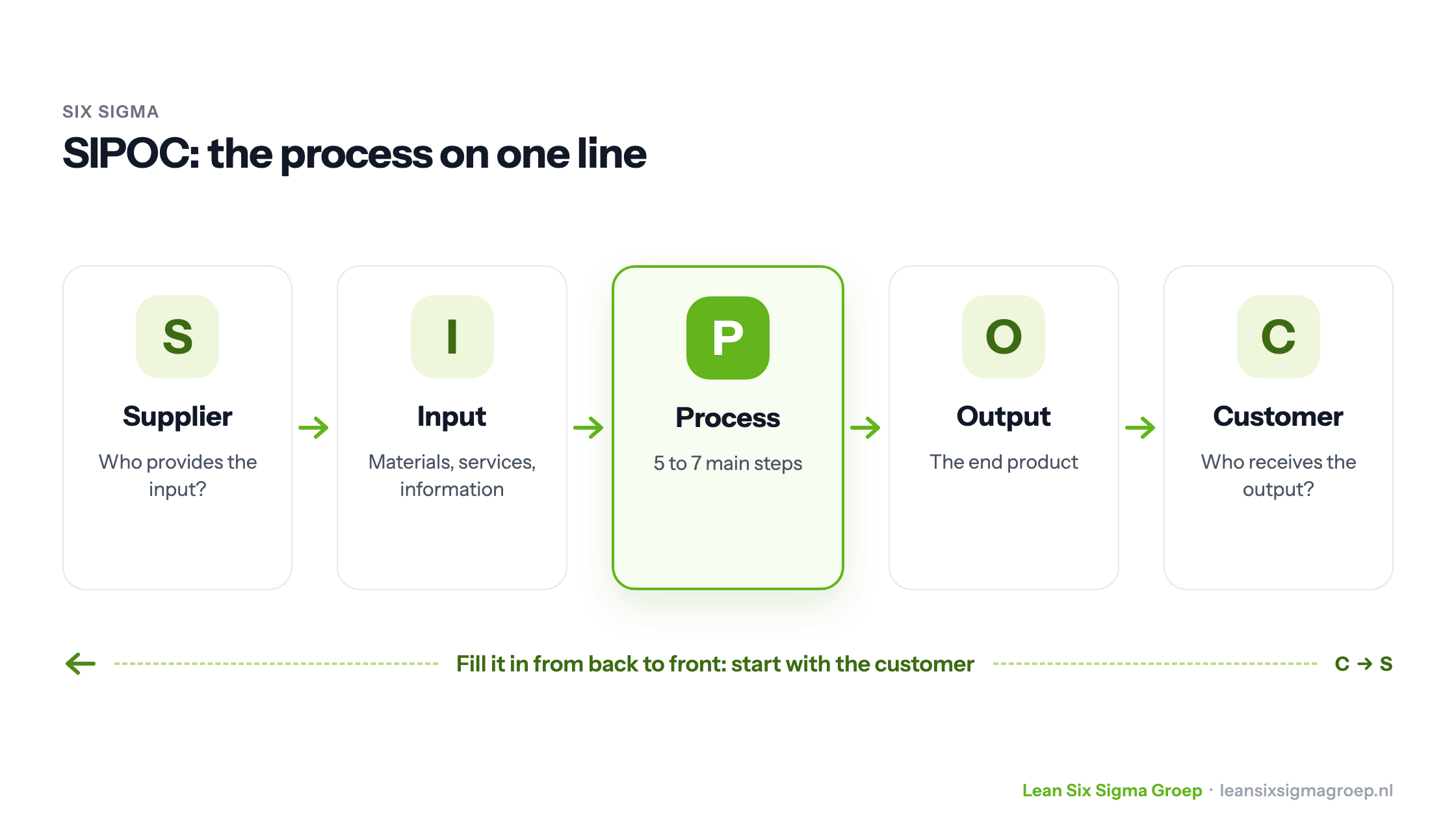
The letters of SIPOC stand for:
- S: Supplier, anyone who provides input to the process
- I: Input, what goes into the process, such as materials, services and information
- P: Process, the activities, described in 5 to 7 main steps
- O: Output, the end product that goes to the customer
- C: Customer, the end user, the one who receives the output
This is one of the tools you learn to apply in the Green Belt training.
During the process steps, value is added to the inputs, which ultimately produces the output for the customer.
A SIPOC is often presented at the start of a process improvement project, such as a Kaizen event, or during the Define phase of the DMAIC process.
It serves different purposes for different people:
- For people who are unfamiliar with a process, it gives a high-level overview
- For people whose knowledge of the process has faded or is out of date, it is a handy reference
- For people defining a new process, it helps them get it clear
How is a SIPOC made?
The information is entered into the diagram starting with the customer and working upstream to the supplier. So a SIPOC is built back to front.
It is important to draw up a SIPOC together with the people who work in the process. That way everyone can contribute their part of the process. A SIPOC gives everyone a clear picture of the reason the process was set up in the first place, which prevents confusion in later phases of the process.
It also makes clear to everyone who is involved in the process and what their role in it is.
Benefits of SIPOC
- It creates mutual understanding and a shared picture of the process, which leads to a high level of engagement.
- It makes the process visual. That adds value for everyone involved and gives you something to hold on to in the conversation about the process.
- It gives a clear picture of the trigger or the assignment being worked on, and prevents confusion in later phases of the project.
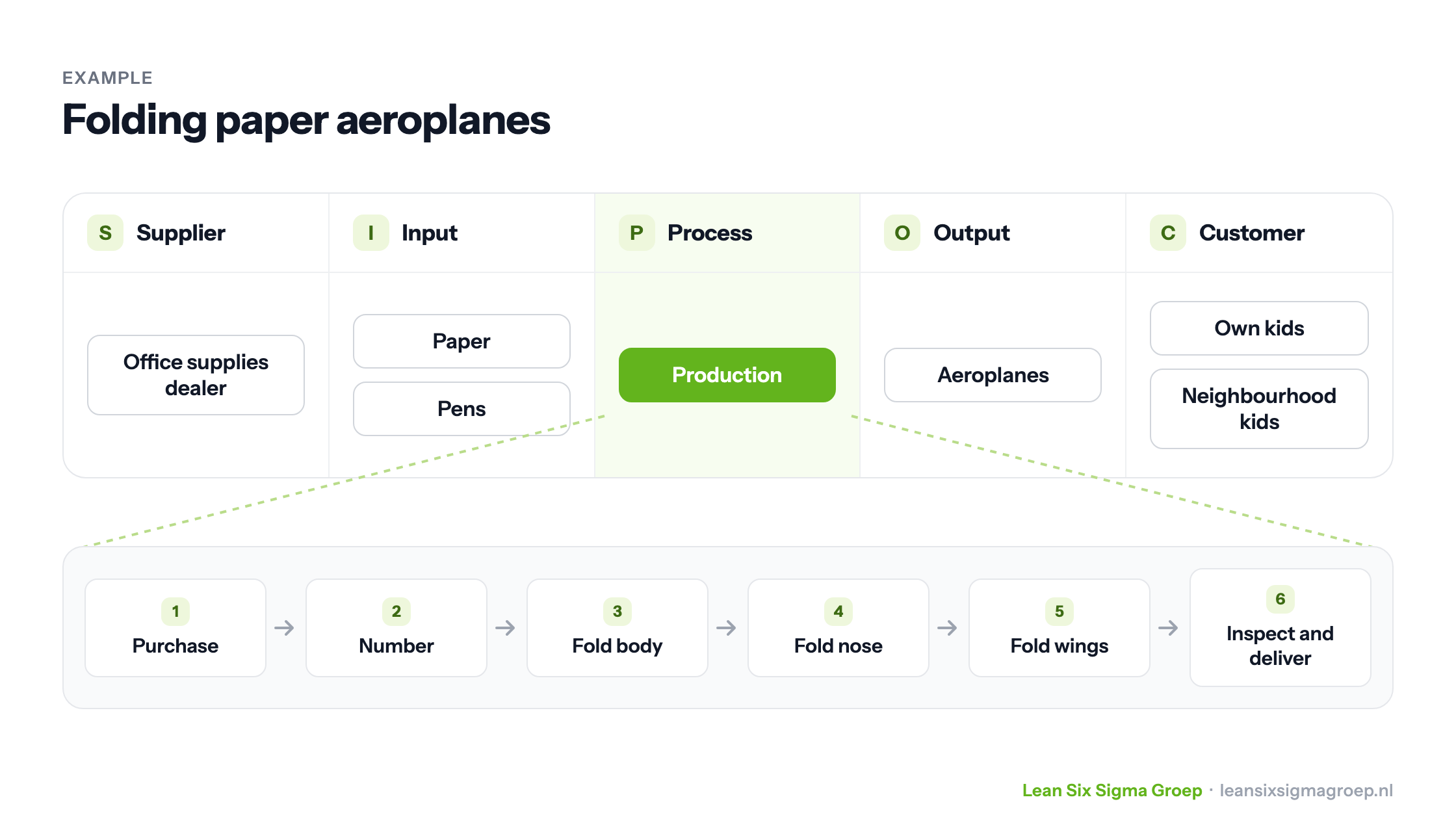
Example of a SIPOC