If you want to improve a process, you first need to understand how it runs. Process mapping helps with that: you map a process so you can see, step by step, what happens in the organisation to deliver a product or service.
What is process mapping?
A process map is a visual overview of the steps in a process. Depending on the form you choose, it also shows who carries out a step, how long it takes or how much work is waiting.
Process mapping is ideal when you want to improve your organisation’s performance. If you don’t know what a process looks like, it is hard to improve it. A well-mapped process shows whether and where improvement is possible.
Process mapping is useful even without improvement plans. You want a customer to receive the same product or service, whichever employee works on it. A process map records the way of working, which makes it a step towards working consistently, and a good tool for onboarding new colleagues.
Forms of process mapping
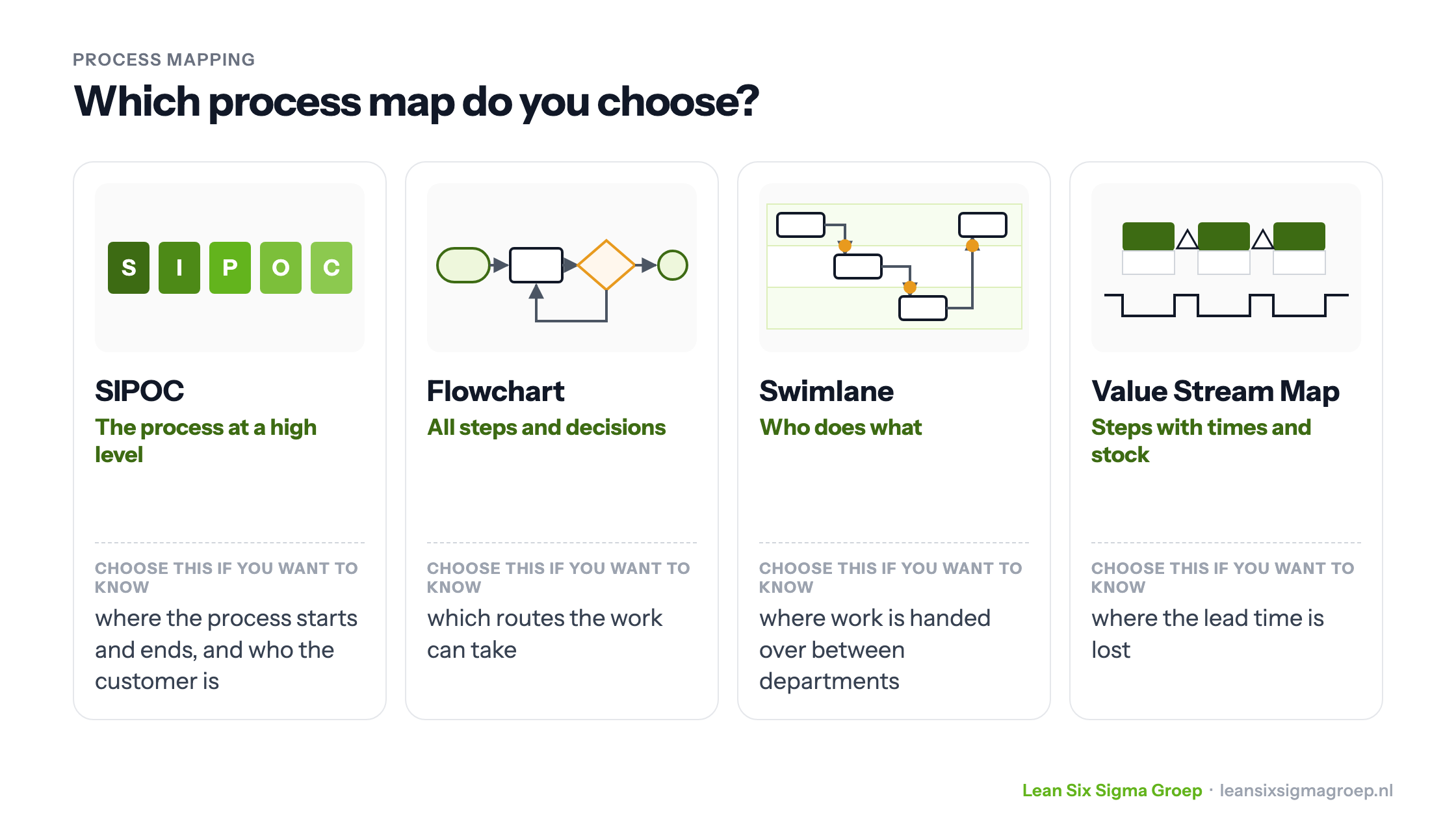
There are several ways to map a process. The image at the top of this article shows the four most common ones, and when to choose which.
- SIPOC: the process at a high level, in five to seven steps, with the suppliers, inputs, outputs and customers. A good start, because you immediately agree where the process starts and ends.
- Flowchart: the best-known form, with symbols for steps and decisions. A flowchart shows all the routes the work can take, giving a complete picture of the process.
- Swimlane: a flowchart in which each department or role has its own lane. That makes handovers and responsibilities very clear.
- Value stream map: widely used in Lean Six Sigma. The process steps are supplemented with data, such as processing time, waiting time and stock. That shows exactly where the process isn’t running well and where lead time is lost.
No form is better than another; they all have their pros and cons. Choose the form that helps you reach your goal. You often start with a SIPOC and then zoom in with one of the other forms.
How to make a process map
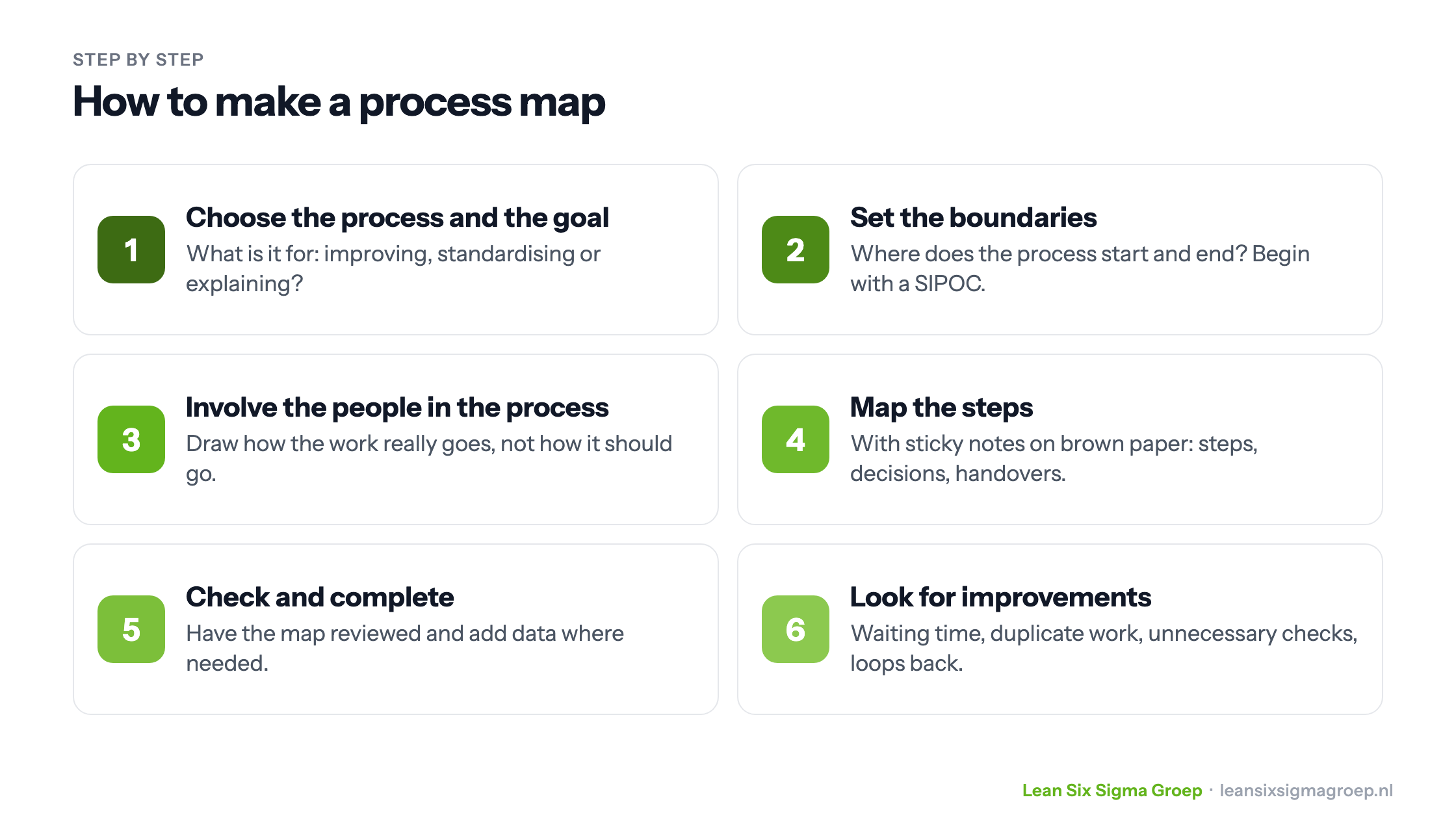
Always make a process map together with the people who work in the process. They do the work every day and know exactly what happens. That gives you a picture of how the work really goes, not how you would like it to go. Differences in the way colleagues work also become visible.
Getting started
Want to get started with process mapping, but not sure how? In our Green Belt training course you go through all phases of an improvement project, with plenty of attention for process mapping. Would you rather do it in practice straight away, together with someone with plenty of experience? Get in touch.