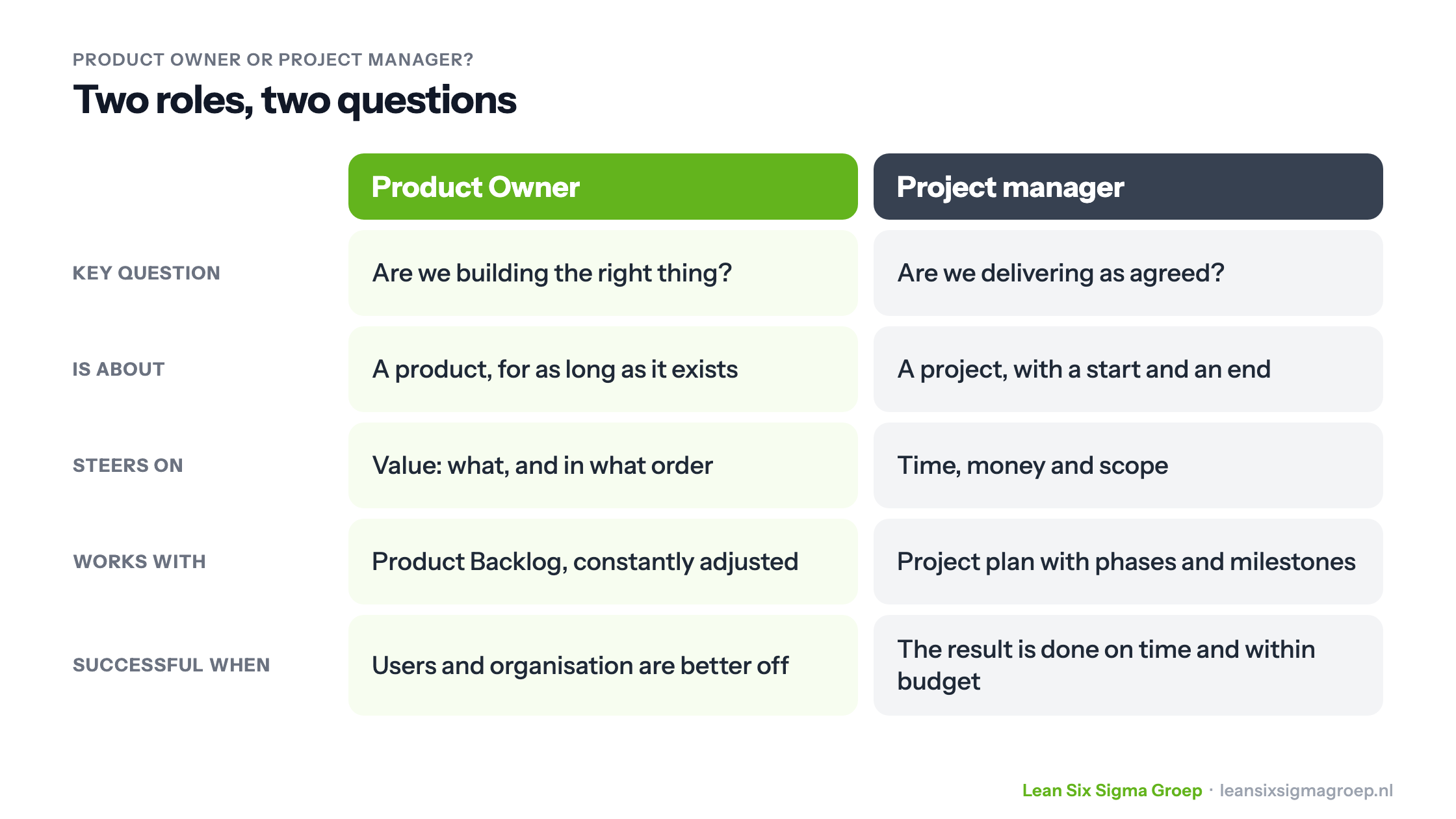
A project manager makes sure a project is delivered on time, within budget and as agreed. A Product Owner makes sure a product delivers as much value as possible, for as long as it exists. So the Product Owner is not a project manager with a new name: the roles ask a different question.
Project or product
The difference starts with what the role is about. A project is temporary: it has a start, an end and a result agreed in advance. A product, such as an app, a service or an internal system, keeps existing and is developed further and further. The image at the top of this article shows the differences side by side.
The project manager
Project management is about planning, executing and closing. The project manager translates the goal into a project plan with phases and milestones, divides the work, guards time, money and scope and steps in when the project threatens to go off track.
That role fits a waterfall approach well: design everything first, then build, then test and deliver. This works well when it is clear in advance what is needed and little changes along the way, such as building a bridge or moving a department.
The Product Owner
The Product Owner is one of the three accountabilities in Scrum, alongside the Scrum Master and the Developers. The Product Owner is accountable for the value of the product. They manage the Product Backlog, the ordered list of what could be done to the product, and decide what comes first.
To do so, the Product Owner works closely with users and stakeholders, and adjusts the order based on what each sprint delivers. So the plan is not fixed: it changes with what the team and the users learn.
Where does the project manager go in Scrum?
Scrum has no project manager. A project manager’s tasks don’t disappear, but are divided over the three accountabilities.
This is one of the tools you learn to apply in the Green Belt training.
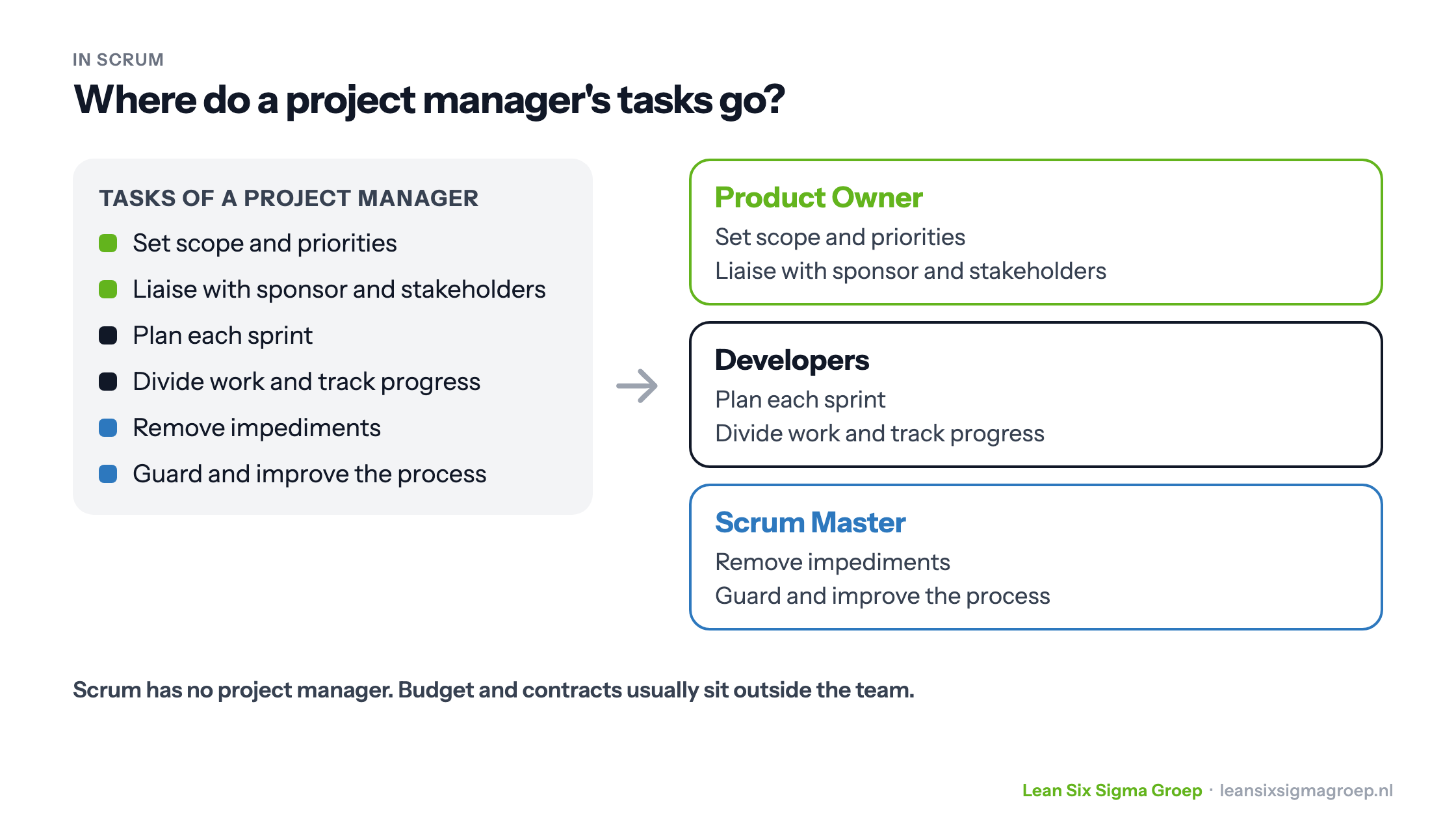
- The Product Owner decides what is built and in what order, and is the point of contact for the sponsor and stakeholders.
- The Developers plan the work of a sprint themselves, divide the tasks and track progress towards the sprint goal.
- The Scrum Master removes impediments and makes sure the team applies Scrum well and keeps improving.
Budget, contracts and coordination with other departments usually sit outside the team. In larger organisations a project or programme manager often remains for this, alongside the Product Owner.
Which role fits your situation?
It is not a question of right or wrong. If the result can be described well in advance and little changes along the way, a project approach with a project manager works. If it is uncertain what the user really needs, or you are developing a product that must keep getting better, a Product Owner fits better.
Many organisations combine both: a project to set up something new, followed by a Product Owner who develops the product further.
A good Product Owner
A good Product Owner has a clear vision of the product, dares to say no to wishes that add little, and knows the users, the organisation and what the team can handle. It is also important that the Product Owner can really decide: without that mandate, the role becomes a mere go-between.
Want to learn more? Take a look at our training courses.